
How to Find Your Visual Style Without Copying Everyone Else
You save the photograph.
Then another.
Then another.
Suddenly you have 847 images sitting on Pinterest that all look incredible...
and absolutely no idea what your work is supposed to look like. 😂
Finding inspiration has never been easier.
That's amazing.
But it also creates a strange creative problem:
How do you learn from everything you love without accidentally becoming a collection of everybody else?
I don't think the answer is to stop looking at other people's work.
I think we need to learn how to look at it differently.
First: copying isn't the same as being influenced or inspired
Every creative person is influenced and inspired by something.
Photographers study photographers.
Directors watch films.
Designers notice packaging.
Musicians listen to music.
You are not supposed to create inside a vacuum.
The problem isn't:
I love this person's work.
The problem begins when your entire creative decision becomes:
How do I make what they made?
Instead, I want to know:
Why did their work make me stop?
That's a much more interesting question.
1. Stop saving images without knowing why
Try this the next time you're scrolling.
Before you save something, pause.
What exactly do you like?
Not:
It's pretty.
Go deeper.
Is it the colour?
The crop?
The expression?
The styling?
The typography?
The lighting?
The movement?
The emptiness?
The humour?
The way the image makes you curious about what happened five seconds before it was taken?
You're not trying to collect images anymore.
You're collecting reasons.
YOUR SPARK! Look at your last 10 saved images and write one sentence explaining why you saved each one.
I promise you'll start seeing patterns.
2. Study outside your own medium
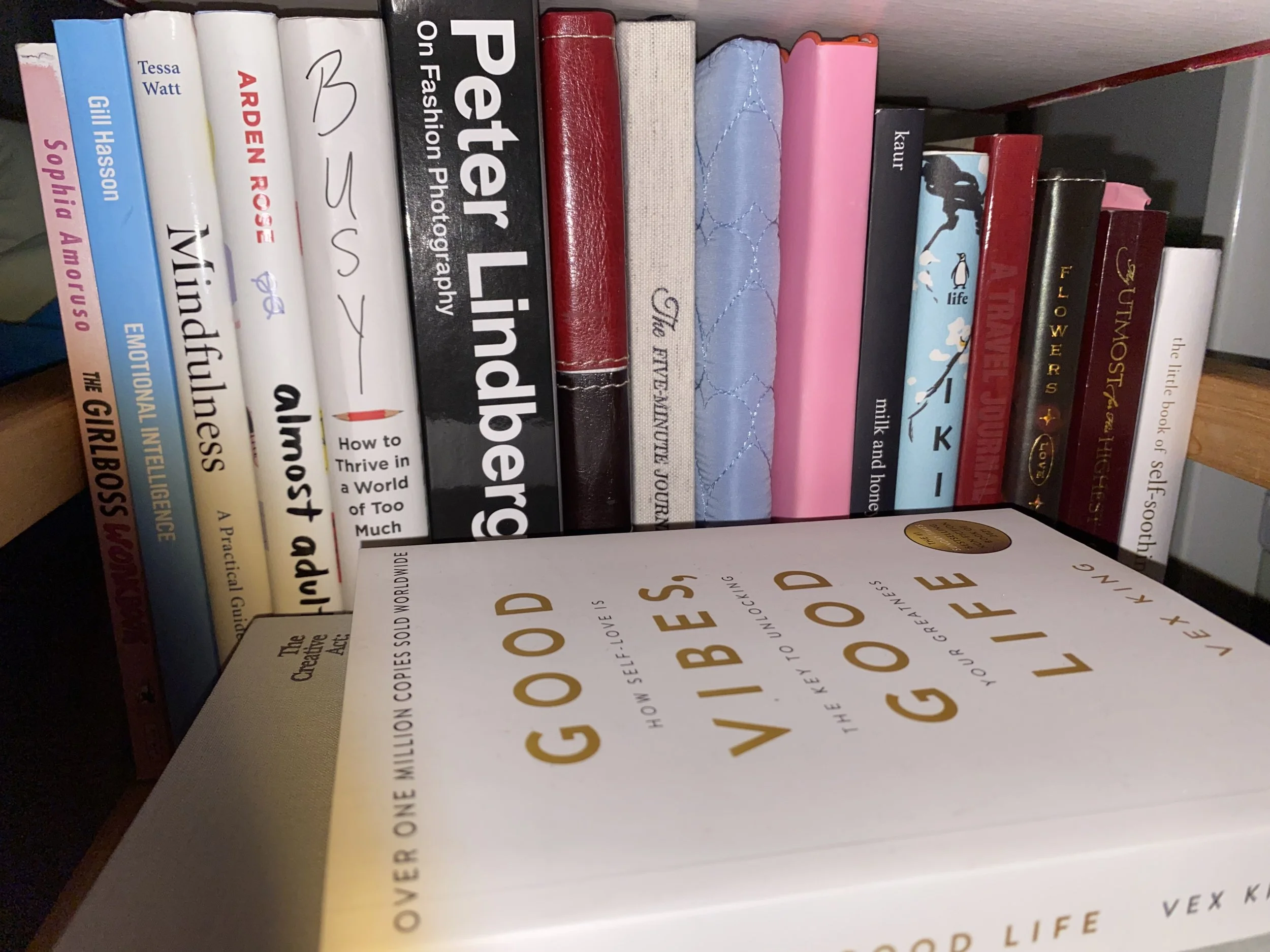
This is one of my favourite ways to avoid accidentally recreating somebody else's work.
If you're a photographer, don't only study photography.
Look at:
Films.
Album covers.
Paintings.
Fashion.
Architecture.
Music videos.
Magazines.
Packaging.
Old advertisements.
Interiors.
Even music.
Yes, you can take visual inspiration from something you can't technically see.
Maybe a jazz song makes you imagine warm light, grain and an old hotel at midnight.
That's information.
The further your inspiration travels before becoming your work, the more room there is for you to enter the idea.
3. Build an inspiration triangle
Instead of choosing one person and thinking:
I want my work to look like theirs.
Choose three completely different sources.
For example:
A photographer
for light.
A film
for atmosphere.
A fashion era
for styling.
Now you're not recreating one finished recipe.
You're taking ingredients from three different kitchens.
Maybe your triangle becomes:
1970s photography
modern Korean editorial design
French cinema
Or:
childhood cartoons
flash photography
ballet
Or:
old Hollywood
street photography
bubblegum packaging
The combinations are where things get interesting.
YOUR SPARK! Choose three influences that would never normally sit beside each other.
4. Translate inspiration instead of recreating it
Let's say you love a photograph of someone standing in a red room.
You could recreate:
red room + same pose + same lighting + similar outfit.
Or you could ask:
What do I actually love about this?
Maybe the answer is:
The subject looks tiny compared with all that colour.
Great.
Now take that principle somewhere completely different.
Photograph someone tiny against a huge blue sky.
Same idea.
Completely different photograph.
That's translation.
You're learning from the creative decision instead of reproducing the result.
5. Remove the reference
This is such a simple trick.
Look at your inspiration.
Study it.
Then...
close it.
Don't keep the reference sitting beside you while you create.
Give your brain a little distance.
You'll remember some things incorrectly.
You'll change others.
You'll combine the reference with things you've seen somewhere else.
You'll make decisions because of the location, equipment, person and light actually in front of you.
Those little deviations?
That's where your own perspective starts sneaking in.
6. Add something that could only come from you
Before you finish, ask:
What's one decision here that came from me?
Maybe it's something from your culture.
Your humour.
Your bedroom.
Your handwriting.
Your favourite colour.
An object you've owned for ten years.
A place only you would think to photograph.
A strange idea you've been carrying around.
A memory.
A mistake you decided to keep.
Your work becomes more distinctive when your inspiration meets your actual life.
Because nobody else has your exact combination of references, memories, experiences and taste.
7. Notice your creative fingerprints
After you've created for a while, look backwards.
Don't ask whether everything matches.
Look for fingerprints.
What colours keep returning?
What kind of faces do you photograph?
Do people look directly at your camera or away from it?
Do your images feel quiet or loud?
Do you love symmetry?
Mess?
Movement?
Tiny details?
Big environments?
What do you keep doing even when nobody told you to?
Those repetitions matter.
They're clues that your taste is becoming visible.
Try the 10 → 3 → 1 exercise
Save this one.
Choose:
10 images you genuinely love.
Then identify:
3 patterns connecting them.
Then make:
1 completely new thing using those patterns, without recreating any of the original images.
For example:
Your ten images reveal:
soft light + movement + unexpected crops
Your challenge isn't to reproduce one of those photographs.
Your challenge is simply:
Make something using soft light, movement and an unexpected crop.
Where you take that is completely yours.
Your visual style isn't one aesthetic
This is something I want you to remember.
Your visual style doesn't have to mean:
I use these four colours.
Or:
Every photograph has this exact edit.
That's branding.
Style can be much deeper.
It can be the things you notice.
The way you frame people.
Your relationship with colour.
How much perfection you allow.
Whether your work whispers or screams.
What you find beautiful that someone else might walk straight past.
That's why your style can evolve dramatically and somehow still look like you.
Inspiration in. You out.
That's really the goal.
Take everything in.
Study beautiful work.
Save things.
Watch films.
Visit galleries.
Notice advertisements.
Listen to music.
Pay attention to fashion.
Let yourself become fascinated by people who are brilliant at what they do.
Then digest it.
Mix it with everything else you've ever loved.
Mix it with your own experiences.
Mix it with your limitations.
Mix it with your weird ideas.
And create something new.
You don't need to avoid influence to become original.
You need enough influences that eventually they collide with you.
That's where things get interesting.
Don't ask, “How can I make this?”
Ask:
“What does this teach me about what I love?”
Then go make something only you would've made. ✨